A prospective player who has never installed the game usually wants one answer before anything else: can it be played without paying? The short version is that World of Warcraft offers a limited free trial, not free-to-play access, and continued play past that trial requires an active subscription and a copy of the current expansion. Everything below works out what that actually costs and what a new or returning character can expect to find once logged in.
A prospective player asks whether the game is free
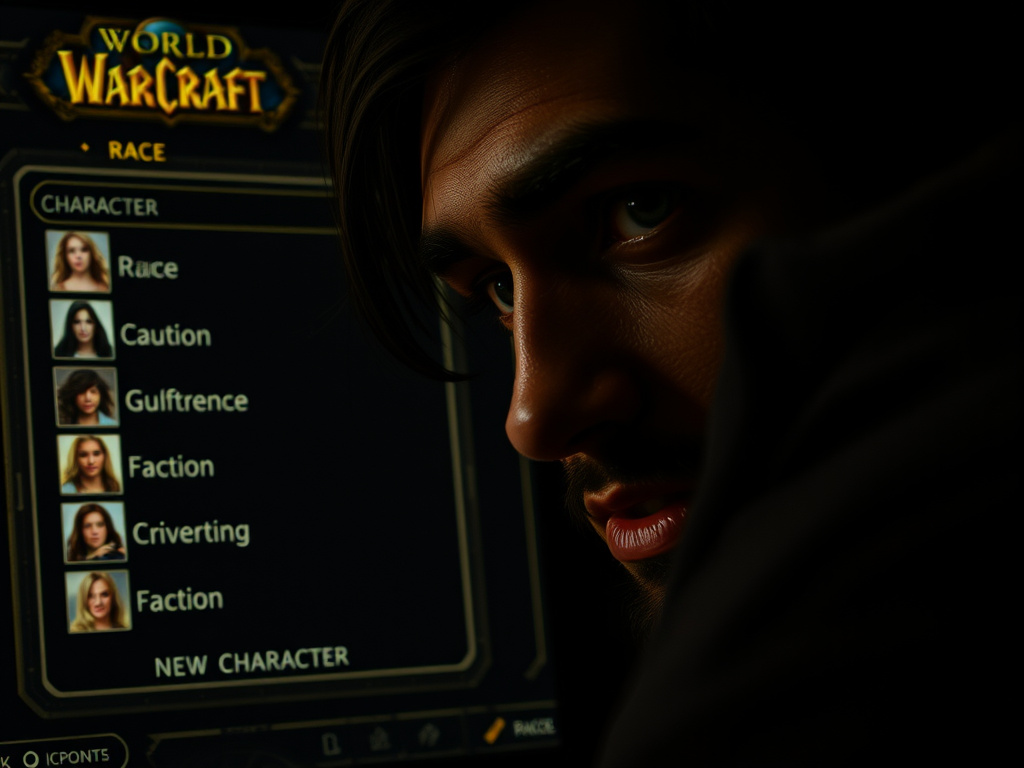
World of Warcraft is a subscription-based massively multiplayer online role-playing game, developed and published by Blizzard Entertainment, which also operates the official site, the account system, and the subscription billing behind it. Wikipedia's overview describes it as a subscription game set in the Warcraft universe, and that description still holds for the current live version of the game as distinct from any one-off promotional trial period. That subscription model — pay to keep playing, rather than pay for cosmetics on top of a free base game — has not changed since launch, and it is the first thing to understand before comparing it to free-to-play titles built around a different business model entirely.
Only a limited free trial exists; continued play requires an active subscription
The trial lets a new account create a character, play through an early span of content, and decide whether the game is worth paying for — but it is bounded, capped well below the full game's level range and restricted in ways meant to limit how a trial account can be used to trade, spam chat, or move gold, rather than to offer an indefinite taste of the whole game. The specific limits change from time to time, so anyone relying on a trial should check the current terms on the official account portal rather than assume last year's limits still apply. What doesn't change is the underlying shape of it: past the trial's ceiling, the account either lapses to read-only status or a subscription has to start.
Subscription is bought through the Blizzard account, and the current expansion is a separate purchase unless bundled
Subscribing happens through the official account portal at worldofwarcraft.blizzard.com, the account system Blizzard Entertainment operates for game time purchases, billing, and character access, where game time is sold in blocks and can also be paid for with a WoW Token bought using in-game gold rather than real money. Separately, the currently active expansion is usually sold on its own, meaning a lapsed player returning after a few years should expect two line items — subscription time, and whatever expansion purchase or upgrade is required to reach the current content — rather than assuming the subscription alone unlocks everything. Bundles that include the current expansion with a subscription block exist from time to time, so it is worth checking the account portal before buying the two separately.
Working out entry cost, then, means adding together whatever subscription term is chosen and whatever expansion purchase applies to the account in question — a returning player who already owns older expansions from a prior purchase does not need to buy those again, only the newest one if their account isn't already current.
Player creates a character
Once an account is subscribed and the client is installed, the first real decision is character creation, and it is a more binding decision than it looks. A character in World of Warcraft is defined by three linked choices made at creation: race, class, and the realm the character is created on — and two of those three, race and realm, quietly determine who that character can play with later.
Race choice fixes faction, and the character is created on a specific realm
Every playable race in World of Warcraft belongs to one of two opposing factions, and picking a race locks in that faction for the character's lifetime short of specific faction-change services. Wikipedia's article on the game covers the Horde and Alliance split as one of the game's defining structural features, present since the original release and carried through every expansion since. A character's realm is chosen at the same time as race and faction, from a list of servers that differ by ruleset (normal, roleplay) and by version — retail World of Warcraft and Classic versions run on separate realm lists entirely, so a character made on a Classic-type realm cannot be picked up and continued in current retail content, and vice versa.
Faction and realm determine which friends the player can group and adventure with
This is the choice that trips up new players most often: two friends who want to quest, run dungeons, and raid together generally need characters on the same realm and, in most group content, the same faction. Opposing-faction characters on the same realm are typically blocked by default from grouping, trading, or mailing each other, which means a friend group deciding "we'll all make characters and figure out details later" often ends up split without meaning to. The fix is straightforward and worth doing before anyone starts leveling:
- Agree on faction (Horde or Alliance) as a group, before anyone opens character creation.
- Agree on a realm, checking that it matches the intended version (retail vs. Classic) and ruleset.
- Create characters together in one sitting where possible, so nobody ends up on the wrong list by accident.
- If a mistake has already been made, check whether a faction-change or realm-transfer service is available on the account rather than starting over from scratch.
Character adventures in Azeroth to gain levels and items
With faction and realm settled, play itself centers on Azeroth, the primary world the game is set in, where characters complete quests, run dungeons, and gradually gain levels and equipment. EBSCO's research starter on the game frames this loop — questing, leveling, gearing up — as the core activity structure that has persisted across the game's history even as the specific zones and mechanics around it have changed.
A new expansion pack raises the level cap and adds content
Periodically, an expansion pack raises the level cap, opens new zones, and often adds new races, classes, or systems layered on top of the existing game. This is the mechanism by which the game has stayed current for years past its original release, and it's also the reason a returning player's years-old character is not obsolete: expansions add on top of the existing world and character progression rather than replacing it, so an old character can simply resume leveling from wherever it was left, generally starting in whatever content matches its current level before catching up to the newest zones.
Between expansions, live content updates supply new things to do
Between major expansion releases, the game receives smaller content patches — new dungeons, raid tiers, storylines, and seasonal systems — that keep the current expansion's content moving without raising the level cap again. For a player deciding where to start, the practical order is: log the existing character in, let the game's own onboarding and quest chains route it toward the current expansion's starting content, and treat any level gap as something the leveling process itself is built to close quickly rather than a wall to grind through manually.
Long-time players report the open world feels empty
A common complaint from players returning after a break is that the open world feels quiet compared to memory — fewer other characters visible while questing, fewer chance encounters in leveling zones. That complaint is usually less about the total number of subscribers and more about where the people who are still logged in choose to spend their time.
Population is concentrated by instanced and endgame content rather than shared open-world play
Most of the game's group content — dungeons, raids, and rated player-versus-player content — is instanced, meaning each group gets its own private copy of that space rather than sharing it with everyone else on the realm. That design has been part of the game since dungeons and raids were introduced, and it means a realm can have an active population that mostly isn't visible from a starting zone, because players past the leveling phase tend to spend the bulk of their play sessions inside instances rather than standing around outside them. That's a structural explanation for the "quiet world" complaint returning players report, rather than evidence the population has simply disappeared.
Grouping, realm choice and current-expansion zones are where remaining players are found
For a returning player trying to judge whether "anyone is still playing," the honest answer depends on where they look:
| Where to look | What to expect |
|---|---|
| Old leveling zones from past expansions | Sparse; most players have already leveled through and moved on |
| Current expansion's leveling and endgame zones | Where active population concentrates |
| Dungeon and raid finder queues | Generally the easiest way to find a group regardless of how quiet a zone looks |
| High-population realms | Denser open-world presence than low-population realms |
| Realm-specific trade and general chat | A rough, informal gauge of a given realm's day-to-day activity |
Realm choice matters here too — a character on a long-standing high-population realm will generally see more open-world activity than one on a realm that has quietly emptied over the years. A returning or new player who wants company should aim for current-expansion content and grouping tools rather than judging the game's health by an old zone gone quiet.
Subscription: what it actually buys and what it doesn't
Subscription is the recurring paid access that everything past the trial depends on, and it is worth being precise about what it does and doesn't include. The subscription itself grants access to play — it does not automatically include every expansion ever released, since the current expansion has historically been sold as its own purchase. It also does not include cosmetic-shop items, character boosts, or server transfers, all of which are separate purchases layered on top of an active subscription in the game's current monetization model.
Longer subscription commitments generally reduce the effective monthly cost compared to paying month to month, and the subscription can be paid for either with a card or with a WoW Token purchased using in-game gold and redeemed for game time, a system that lets an active player fund their subscription entirely through in-game earnings if they choose. Anyone budgeting for the game should check the current tiers and expansion pricing directly on the official account portal, the billing system Blizzard Entertainment maintains for the game, before committing, since pricing and bundling change over time and vary by region.
Race: a permanent choice with more weight than it first appears
Race is the selectable ancestry assigned to a character at creation, and its consequences reach further than character appearance. Beyond fixing which faction a character belongs to, race in World of Warcraft has historically also come with small mechanical differences — passive racial traits that vary slightly between races within the same faction — though these differences are generally minor compared to class and gear choices for most players outside of high-end competitive content.
The heavier, more practical consequence of race choice is the faction lock it creates, which is why it deserves more deliberation at character creation than it typically gets from new players eager to start playing. A player who wants to try a race on the "other" faction from their main character group needs either a second account setup on the opposite side or a faction-change service — there is no way to switch a character's faction casually mid-game without one of those routes.
Faction: the divide that shapes who you play with
Faction is the game's foundational social division, splitting the population into two opposing sides — Horde and Alliance — that have run through the game since its original release, as covered in the game's Wikipedia entry. Faction affects far more than lore and lightly-themed capital cities: it determines who a character can group with in dungeons and raids, who they can trade with, whether they can read each other's chat without addons, and even which starting zones and some questlines are available to a given character.
For most players the faction decision is really a social one rather than a mechanical one — pick whichever faction the friends already playing are on, since class options, race aesthetics, and story content exist on both sides in comparable breadth for current content. The mechanical racial differences between factions have narrowed over the years to the point where faction choice is rarely the deciding factor in competitive performance; it remains, instead, the deciding factor in who you're actually able to log in and play alongside.
Anyone about to install the game should settle faction and realm with whoever they intend to play with first, buy the subscription and current expansion through the official account portal, and only then work through race and class — the order that avoids most of the mistakes new and returning players make before their first hour of play even starts.